Best picture books about feelings for toddlers
Before a child can manage a feeling, they need a name for it. Happy, sad and angry come first. Worried, disappointed and proud come later. These books show feelings on faces and in bodies, so you and your child can spot them together and grow a small word list for what is going on inside.
As an Amazon Associate I earn from qualifying purchases. Our Amazon links go to Amazon UK (amazon.co.uk). This guide is run by Amor Picture Books (Nova Group), publisher of the Amor books. Our own books are marked Our book. How we choose.
How to use these books
- 1
Name it in one short sentence
"You look angry. Your hands are tight." Naming it, without solving it, gives your child a word to borrow.
- 2
Play face detective
Cover the words and ask: "How does she feel? How can you tell?" Point at the eyes, the mouth, the shoulders.
- 3
Grow the word list slowly
Begin with four feelings. Add one new word at a time when it matches something from your child's day.
- 4
Say your own feelings out loud
"I feel frustrated because the bus is late. I'm taking a slow breath."
- 5
Link the story to real life later
"Remember Sophie in the book? You looked a bit like her at the park today."
The list
1. In My Heart: A Book of Feelings
Jo Witek
- Age 3 - 5 years
- 30 pages
- Hardcover
A girl describes how each feeling sits in her heart, heavy, light or fluttery. Calm words for big feelings.
Pick this one if you want gentle words for how feelings feel inside the body.
View on Amazon UK2. The Feelings Book
Todd Parr
- Age 3 - 6 years
- 24 pages
- Board book
Bold, simple pictures of all kinds of feelings, including the silly ones. Short enough for the youngest.
Pick this one if you want a short book that names lots of feelings, silly ones too.
View on Amazon UK3. Ruby's Worry
Tom Percival
- Age 3 - 7 years
- 30 pages
- Board book
Ruby's worry grows bigger and bigger until she talks about it. A warm story, no scolding.
Pick this one if your child keeps a worry inside instead of telling you.
View on Amazon UK4. When Sophie Gets Angry, Really, Really Angry
Molly Bang
- Age 4 - 7 years
- 36 pages
- Paperback
Sophie gets so angry she runs outside, slowly calms down and comes home to a hug. Shows that you can reset after a big feeling.
Pick this one if you want to show that even very big anger can calm down.
View on Amazon UK5. Today I Feel Silly & Other Moods That Make My Day
Jamie Lee Curtis
- Age 6 - 8 years
A girl's moods change through the day, in rhymes. Helps children see that feelings come and go. Our suggestion: 3+ with an adult.
Pick this one if moods change many times a day in your house.
View on Amazon UK6. Glad Monster, Sad Monster
Ed Emberley
- Age 4 - 8 years
- 32 pages
- Hardcover
Colourful monster masks show different feelings. Playful and hands-on for toddlers.
Pick this one if your child likes to play and act out feelings.
View on Amazon UK7. How Are You Peeling?
Saxton Freymann
- 48 pages
- Hardcover
Fruit and vegetables with real faces show different moods. Fun to copy the faces together.
Pick this one if your child likes copying faces in the mirror.
View on Amazon UK8. Big Feelings
Alexandra Penfold
- 40 pages
- Paperback
A group of children feel angry and let down when plans go wrong, and find a way forward together.
Pick this one if your child gets upset when plans change.
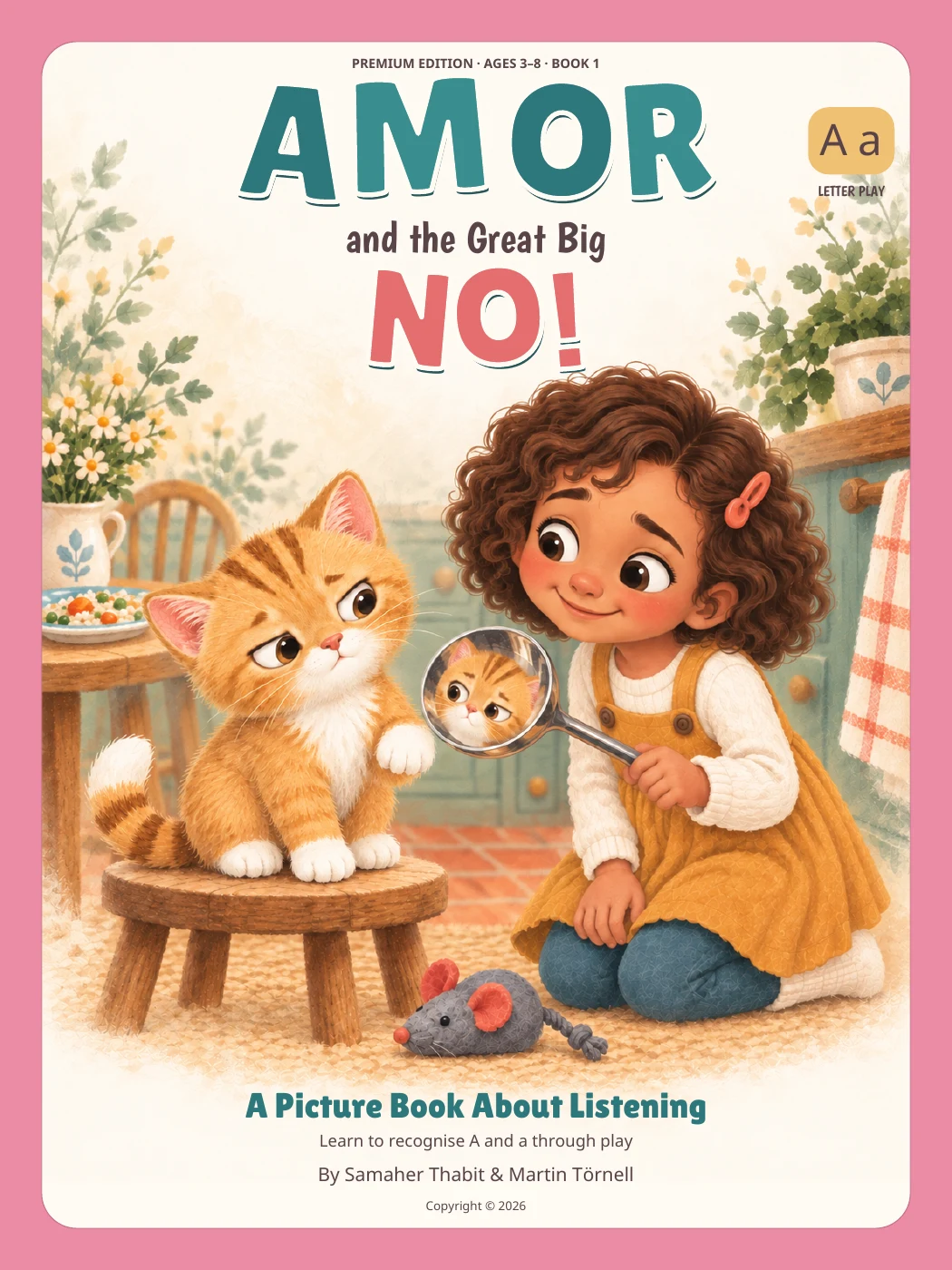
View on Amazon UK9. Amor and the Great Big NO! Our book
Samaher Thabit, Martin Törnell
- Age 3 - 8 years
- 34 pages
- Paperback
A big NO at the dinner table and a kitten who wants to help the family understand. A real story about a big feeling, for children aged 3-8.
Pick this one if you want a story where a strong feeling shows up as a big NO.
View on Amazon UK
Books with a "Publisher" link: age, pages and format come from the publisher's own page. Other ages come from the Amazon UK page for the edition linked. Pages and format refer to the edition linked. If we could not verify a detail, we leave it out. Details checked 26 Oct 2026.
Questions parents ask
How do I teach my toddler words for feelings?
Name what you see in the pictures in short sentences, like she looks sad. Then name feelings in everyday life too, including your own.
How can my child learn to recognise feelings in others?
Look at faces and bodies together in a book: eyes, mouth, hands, shoulders. A calm book is an easy place to practise.
Which feeling words should we start with?
Start with a few: happy, sad, angry and scared. Add new words like worried, frustrated or proud slowly, when they fit something that really happened.
Is it normal for toddlers to have such big feelings?
Yes. Strong, quickly changing feelings are a normal part of the toddler years.
Why is Amor and the Great Big NO! on this list?
It is our own book, for children aged 3-8, about a big NO at the dinner table. We include it once and mark it clearly.